Two days a week, full impact: making a part-time role work
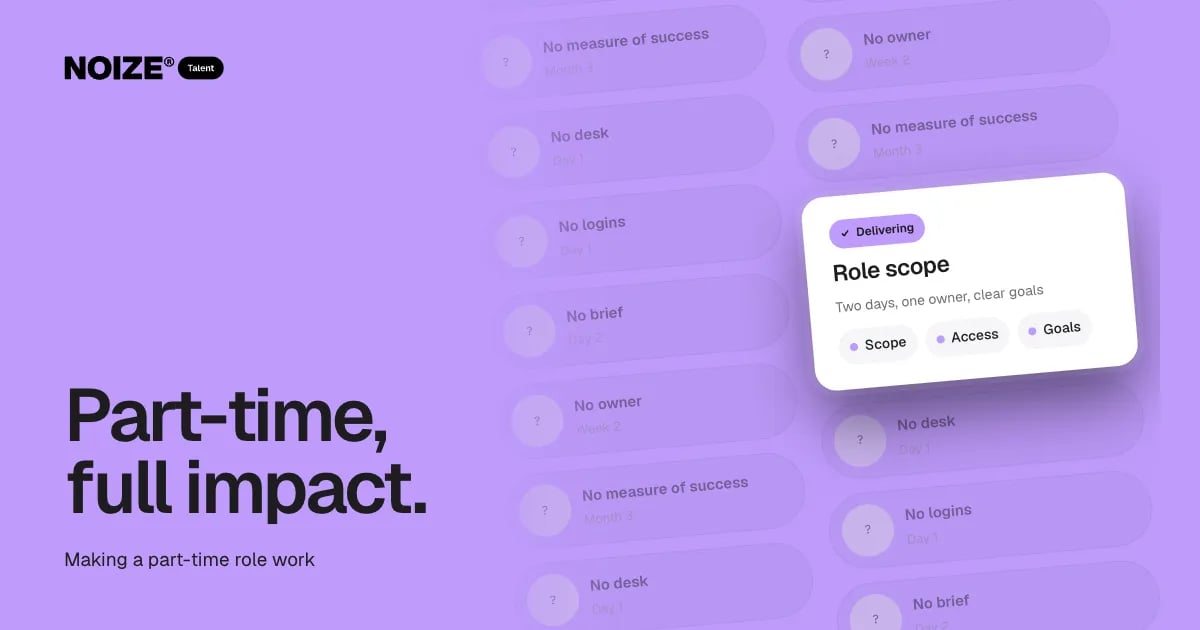
The new part-time marketing manager starts on a Tuesday. There is no desk ready. The logins haven't been created. The brief is a conversation from three weeks ago. Nobody is sure who they report to. By month three, nobody can say what success looks like, and the role is quietly judged a failure.
Part-time roles rarely fail because the person is part-time. They fail for full-time reasons: unclear scope, missing access, no owner and no measure of success. Fix those, and two days a week can deliver remarkable impact.
The short version
- A part-time role works when it is set up properly before day one.
- Define the scope and the three outcomes that matter.
- Name one owner.
- Have devices, accounts and access ready.
- Set fixed days, a short weekly check-in and a monthly review.
- Give the person enough context to work independently.
- With those foundations, part-time people focus on the highest-value work and deliver from the first week.
Why part-time roles fail
01Unclear scope
Without a defined focus, part-time hours disappear into whatever is urgent.
02Missing access
Days are wasted waiting for logins, files and permissions.
03No owner
The person reports to everyone and no one, so priorities conflict.
04No measure of success
Without agreed outcomes, it is impossible to tell whether the role is working.
05Disconnected from the team
Missing key meetings and decisions leaves part-time people out of the loop.
How to set up a part-time role
01Write the scope
One page: purpose of the role, responsibilities, what is out of scope and the three outcomes for the first ninety days.
02Name the owner
One person sets priorities, answers questions and reviews progress.
03Ready the access
Laptop, email, software, files and permissions working before day one. NOIZE IT makes this routine.
04Fix the days
Consistent days help the team know when the person is available and help the person build rhythm.
05Set the rhythm
A short weekly check-in on priorities and blockers. A monthly review against outcomes.
06Share the context
The plan, the brand, the customers and the current numbers, so the person can make good decisions without asking.
> I've worked with part-time specialists who outperformed full-time hires, and the difference was always the setup. When they walked into clear goals, working access and an owner who made decisions, two days was plenty. When they didn't, five days wouldn't have been enough.
“Couldn't recommend these guys enough.”
Focus on the highest-value work
With limited hours, a part-time role should concentrate on work that needs their experience: strategy, decisions, coaching and complex tasks. Routine admin should sit elsewhere. Protecting their time for high-value work is what turns two days into real impact.
An illustrative example
Picture a growing clinic hiring a part-time practice manager two days a week. Before she starts, the owner writes a one-page scope with three ninety-day outcomes, IT sets up her accounts and devices, and her days are fixed as Monday and Thursday with a weekly check-in. Within a month she has new rosters, a simpler booking process and a monthly report the owner actually reads.
Mistakes to avoid
- Don't expect full-time output from part-time hours.
- Don't schedule the role's days around everyone else's convenience. Consistency matters.
- Don't skip the monthly review. It keeps the role focused and shows its value.
Where Talent fits
NOIZE Talent provides part-time, fractional and embedded people, and helps shape the scope so roles succeed. NOIZE IT readies access. NOIZE Sales and Marketing provide the systems and plans people walk into. See talent.noize.com.au.
Questions to ask before a part-time role starts
- What three outcomes matter most in the first ninety days?
- Who is the single owner?
- Which days will the person work, consistently?
- What accounts, files and tools do they need?
- Which meetings should they attend?
- What routine work can sit elsewhere so they focus on high-value tasks?
Answering these before day one is what turns two days into full impact.
What good looks like
The person arrives to a working laptop, accounts and a clear one-page scope. They work the same days each week. A short weekly check-in keeps priorities aligned, and a monthly review measures progress against outcomes. The team knows what they own and when they are available. Within weeks, the role is delivering visible results, and the business is deciding whether to increase the days rather than questioning the role.
Where to start this week
For any part-time role you have or are planning, write the three outcomes that would make it a success in ninety days and name its single owner. If either is hard to write, the role isn't ready yet.
How Talent connects to the rest of NOIZE
The value grows when this department works alongside the rest of the group. NOIZE Books sets up payroll correctly. NOIZE Strategy clarifies the priorities a fractional leader will own. When those departments work alongside Talent, new people arrive into a working system and deliver sooner, whether they are fractional, part-time, contract or permanent. NOIZE Sales builds the process and playbook a new salesperson walks into. NOIZE Marketing provides the plan a marketer will run. NOIZE IT readies devices, accounts and access before day one, and removes them on the last day.
Related reading
- The right people, without the full-time hire: fractional roles explained
- Capability now, commitment later
Common questions
Can a part-time role really work for a senior position?
Yes, especially when the role focuses on judgement, strategy and leadership rather than volume of tasks.
How do I onboard a part-time employee?
Prepare scope, access and context before day one, name an owner and set a weekly check-in.
How many days does a part-time marketing manager need?
Often two or three days a week, depending on the size of the plan and support available.
How do I measure a part-time role?
Against three to five agreed outcomes reviewed monthly.
Should part-time people attend team meetings?
Key meetings on their working days, so they stay connected to decisions.
What if the role needs more hours?
Flexible engagements can increase days as the need grows.
Who sets up devices and access?
NOIZE IT can prepare everything before the start date.
Can NOIZE provide part-time specialists?
Yes. NOIZE Talent provides part-time, fractional and on-demand people.
Can a part-time role work remotely?
Often, yes, especially with good systems and a regular rhythm of check-ins.
How do we hand over work between part-time days?
Keep tasks and notes in shared systems, so work continues smoothly between days.
What if the person isn't the right fit?
We review early and adjust the engagement or the person, so the role keeps delivering.
Do you provide executive support?
Yes. Executive and administrative support can be provided on flexible terms.
What should I tell NOIZE Talent first?
The role, the hours and how long you need it.
How does NOIZE Talent find the right person?
We start with the capability, hours and duration you need, then shape the engagement and match people with relevant experience.
Your first strategy conversation is on us.
Have a chatThe brand for business.