Capability now, commitment later
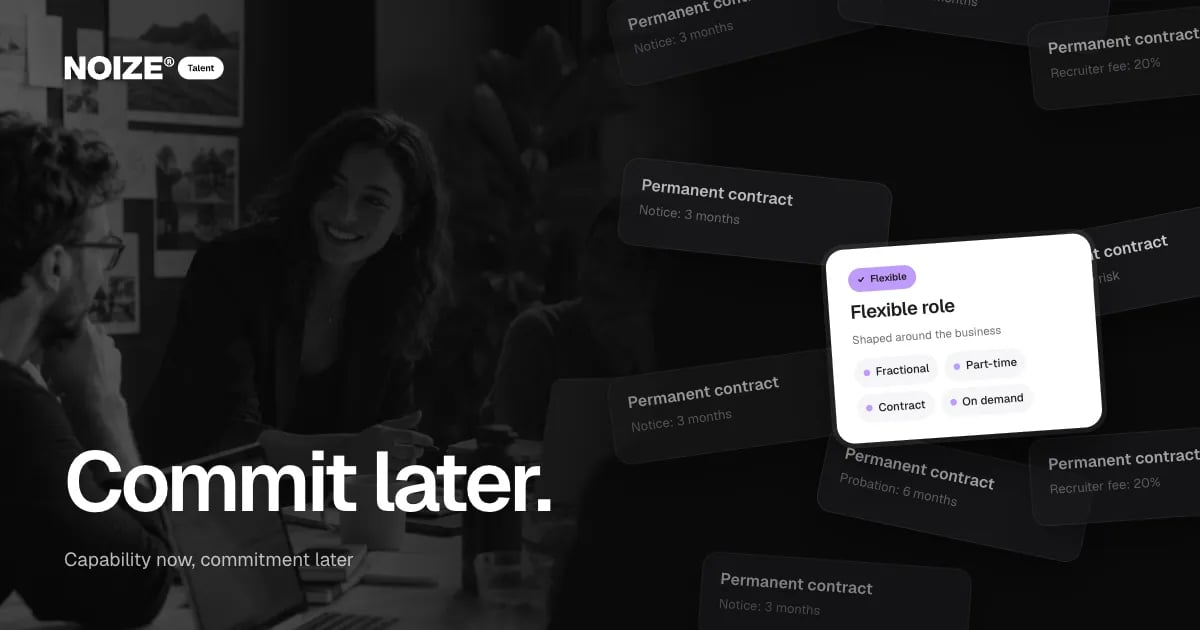
A permanent hire is a big commitment. A recruiter fee of up to a fifth of the salary. A probation period of several months. Notice periods on both sides. Superannuation, leave and equipment on top. All of that before anyone knows whether the role is right for the business at this stage.
Owners not ready for a permanent hire shouldn't have to make one. Flexible talent lets a business build the capability it needs now, learn what the role really requires and commit when the evidence is clear.
The short version
- A flexible workforce uses a mix of engagement models: fractional, part-time equivalent, full-time equivalent, contract, project-based, on-demand and embedded team members.
- Each suits a different need.
- Together they let a business add capability quickly, scale up or down with demand and test roles before committing.
- Permanent hires still make sense once a role is stable and needed full time, and the flexible period shows exactly what that role should be.
The engagement models, plainly
01Fractional
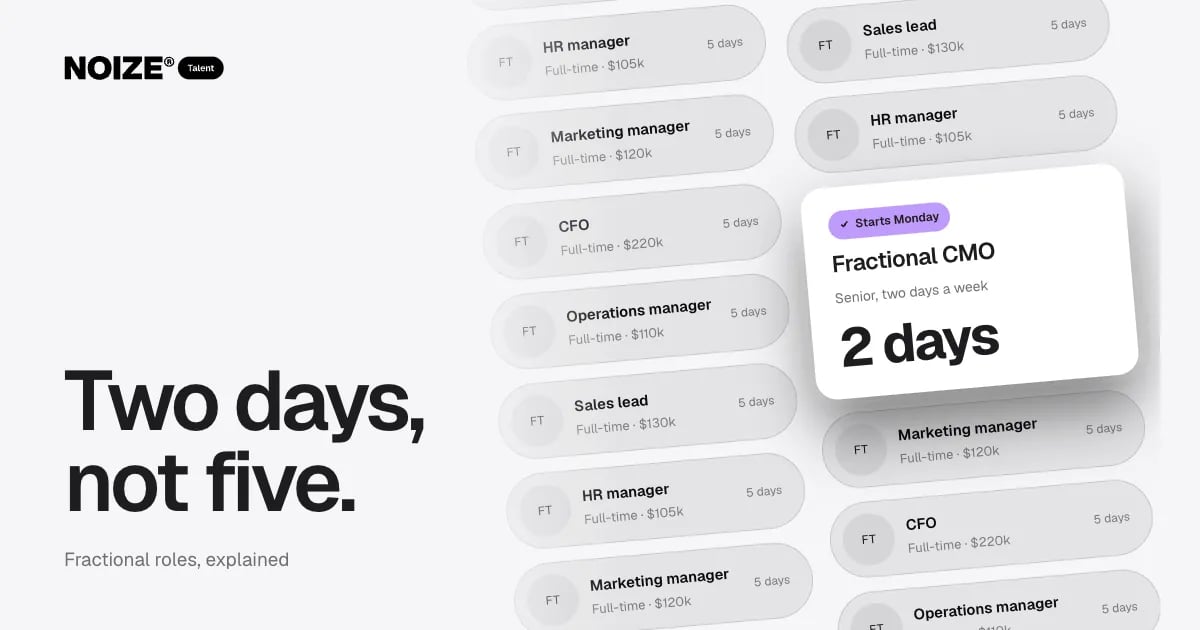
A senior person for part of the week, ongoing. Best for leadership and specialist judgement.
02Part-time equivalent
A set number of days each week for a defined function, such as marketing coordination or bookkeeping support.
03Full-time equivalent
A dedicated person working full time on your business, without you carrying the employment overhead directly.
04Contract
A person engaged for a defined period, often to cover growth, leave or a temporary need.
05Project-based
A person or team for a specific piece of work with a clear start and finish.
06On-demand
Capability called on as needed, often across several skills, such as design, development or content.
07Embedded team members
People who sit inside your team, use your systems and work as part of it day to day.
Why flexibility matters for growing businesses
- Speed. Capability arrives in days rather than months.
- Fit. The engagement matches the hours and duration the work needs.
- Lower risk. Roles can be tested before permanent commitment.
- Scalability. Add or reduce capacity as demand changes, through busy seasons, new contracts or quieter periods.
- Access. Skills that would be hard or expensive to hire permanently become available.
> I've invested in dozens of ventures, and the ones that burned cash fastest often hired permanent teams ahead of revenue. The ones that grew steadily built flexible teams first, proved the work, then hired permanently into roles they understood.
“Couldn't recommend these guys enough.”
Choosing the right model
Ask three questions. How many hours does the work genuinely need? For how long? And how senior does the person need to be? Senior and ongoing points to fractional. Defined and temporary points to contract or project-based. Varied and occasional points to on-demand. Full time and stable points to a full-time equivalent or permanent hire.
An illustrative example
Imagine a growing professional services firm that wins a large contract. Rather than hiring three permanent staff, it brings in a project team for six months and a fractional operations lead two days a week. The contract is delivered, the firm learns which capabilities it needs permanently and hires one person into a clearly defined role.
Mistakes to avoid
- Don't use flexible talent to avoid defining roles. Clarity matters in every model.
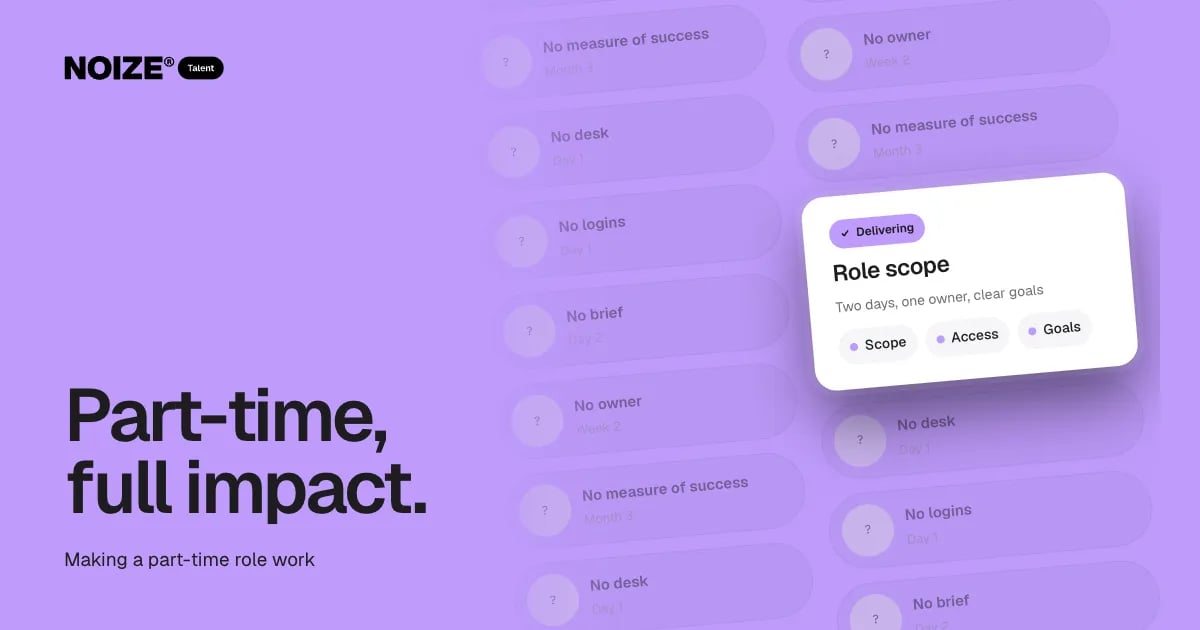
- Don't forget onboarding. Flexible people need access, context and an owner.
- Don't stay flexible forever if a role has become permanent in practice.
Where Talent fits
NOIZE Talent shapes engagements around what the business needs: the role, the hours and how long. It also helps with workforce planning, team structure, recruitment and onboarding when a permanent hire is right. NOIZE IT makes sure new people have devices and access, and NOIZE Sales and Marketing provide the systems and plans they walk into. See talent.noize.com.au.
Questions to ask when planning capability
- What capabilities will the business need over the next twelve months?
- Which are ongoing and which are temporary?
- Which need senior judgement and which need hands?
- Which are needed every week and which occasionally?
- Where is the business currently stretched?
- Which roles would we regret making permanent too early?
The answers form a simple workforce plan.
What good looks like
The business has a short capability plan showing each need, the hours, the duration and the right engagement model. Flexible people are onboarded properly with access, context and an owner. Permanent hires are made into roles that have already been tested. The team can scale up for busy periods and down for quieter ones without painful decisions. Costs track the work, not the org chart.
Where to start this week
List the capabilities the business needs over the next twelve months. Next to each, write the hours per week and how long it is needed. The pattern usually shows which roles should be flexible and which should be permanent.
How Talent connects to the rest of NOIZE
This is where the wider NOIZE group makes a difference. NOIZE Marketing provides the plan a marketer will run. NOIZE IT readies devices, accounts and access before day one, and removes them on the last day. NOIZE Books sets up payroll correctly. NOIZE Strategy clarifies the priorities a fractional leader will own. When those departments work alongside Talent, new people arrive into a working system and deliver sooner, whether they are fractional, part-time, contract or permanent. NOIZE Sales builds the process and playbook a new salesperson walks into.
Related reading
- The right people, without the full-time hire: fractional roles explained
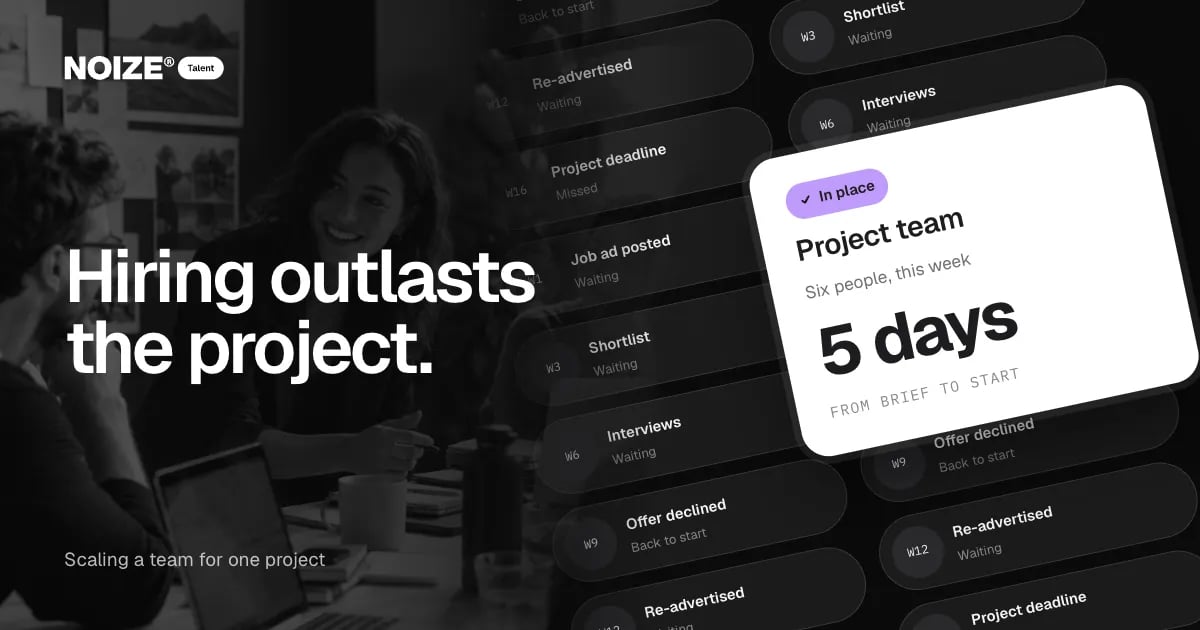
- Hiring takes longer than the work: scaling a team for one project
Common questions
What is a flexible workforce?
A team built from a mix of permanent and flexible engagement models matched to what the business needs.
What is the difference between contract and fractional?
Contract roles are usually for a defined period or project. Fractional roles are ongoing part-time positions, often senior.
Is flexible talent more expensive?
Hourly rates can be higher, but you avoid recruitment fees, idle time and long commitments, so total cost is often lower.
Can flexible people become permanent?
Yes. Many businesses use flexible engagements to test roles before hiring.
What is on-demand talent?
Skills called on when needed rather than on a fixed schedule.
How do I manage a flexible team?
With clear scope, a named owner, regular check-ins and the same systems the rest of the team uses.
What does workforce planning involve?
Mapping the capabilities needed over time and choosing the right engagement model for each.
Can NOIZE recruit permanent staff?
Yes. NOIZE Talent provides recruitment once a permanent role is right.
How do we keep a flexible team connected?
Use the same systems, include people in relevant meetings and hold regular check-ins.
What is an embedded team member?
Someone who works inside your team day to day, using your systems, while engaged through NOIZE Talent.
Who employs a flexible team member?
It depends on the engagement model. We agree the arrangement with you up front.
Can we try a role before committing?
Yes. Flexible engagements are a practical way to test a role.
What if the person isn't the right fit?
We review early and adjust the engagement or the person, so the role keeps delivering.
Your first strategy conversation is on us.
Have a chatThe brand for business.