New people need a system to walk into
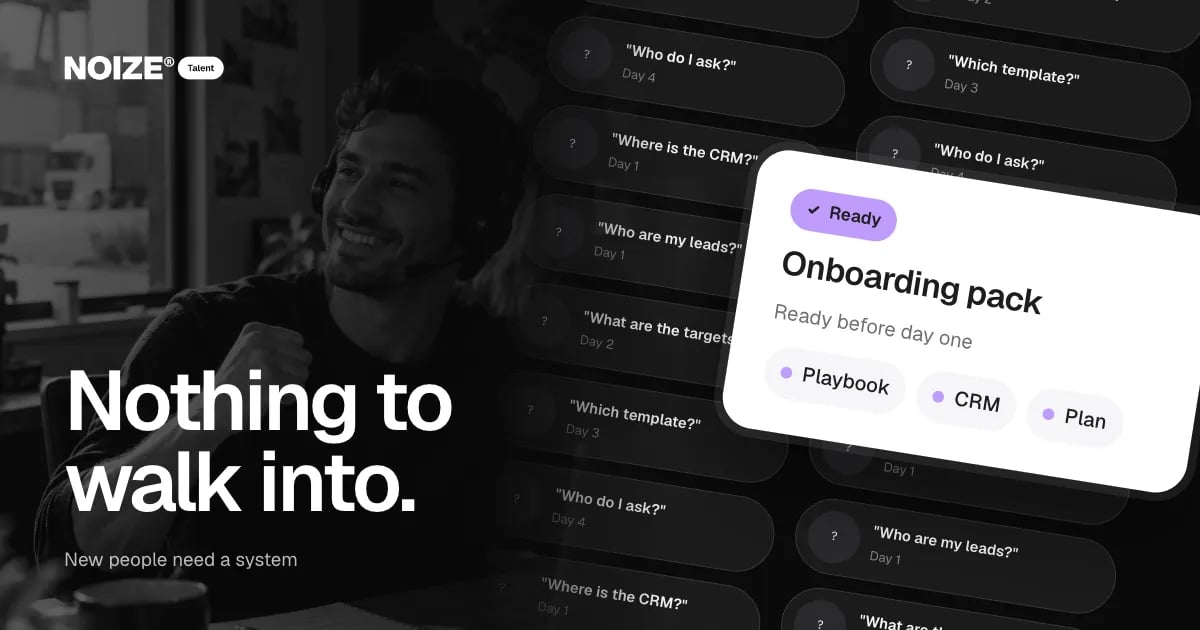
- "Where is the CRM?
- " "Who are my leads?
- " "What are the targets?
- " "Which proposal template do I use?
- " "Who do I ask?
"
Every new starter asks questions. When the answers exist, they settle in quickly and start contributing. When the answers live in someone's head, or nowhere at all, even talented people struggle. They spend their first months working out how things work instead of doing the work they were hired for.
The short version
- Good sales onboarding starts before day one, with a playbook, CRM and leads ready.
- New people perform when they walk into a working system: clear priorities, documented processes, tools set up and a plan for their first ninety days.
- Talent provides the people.
- Sales and Marketing provide the playbook, CRM and plan they will run.
- IT provides devices and access.
- When all of that is ready before day one, new starters ramp up faster, perform sooner and are far more likely to stay.
Why talented people underperform
01No documented process
They have to reverse-engineer how the business works.
02Tools not ready
Days lost waiting for access, accounts and equipment.
03Unclear priorities
Everyone gives them a different job to do first.
04No plan for the first months
Without milestones, progress is invisible and confidence drops.
05No one to ask
Managers are too busy, so questions go unanswered or interrupt the founder.
What a system to walk into includes
- A role scope. Purpose, responsibilities and outcomes for the first ninety days.
- The plan. The current business and marketing priorities, so they know where their work fits.
- The playbook. For sales roles, the process, scripts, objections and templates. For other roles, the key processes written down.
- The tools. CRM, email, files and software set up with the right permissions.
- A ninety-day plan. Weekly milestones for the first month, then monthly goals.
- A buddy or owner. One person who answers questions and checks in regularly.
> I've hired into businesses with great systems and businesses with none. The same calibre of person delivered completely different results. In the first, they were contributing in weeks. In the second, they were frustrated within a month and gone within six.
“They have been nothing short of amazing and have played a major part in our success!”
How the departments work together
NOIZE Talent hands to NOIZE Sales when new people need a system, and to NOIZE Marketing when they need a plan. Sales builds the playbook and CRM stages. Marketing provides the plan and the leads. IT readies devices and access. When Talent places someone, they walk into all of it.
An illustrative example
Picture a business bringing on a fractional sales lead and an embedded salesperson. Before they start, Sales documents the process and sets up the CRM, Marketing shares the campaign plan and lead targets, and IT prepares laptops and logins. Both start on a Monday with a ninety-day plan. By the end of the first month, they have run their own pipeline reviews and closed early deals.
Mistakes to avoid
- Don't hire before the basics are documented.
- Don't overload new starters with everything at once. Sequence the onboarding.
- Don't skip the thirty, sixty and ninety-day check-ins.
Questions to ask before someone new starts
- What will they need to know in their first week?
- Where are our processes written down?
- Which tools and accounts will they use?
- What are their targets or outcomes for ninety days?
- Who will answer their questions?
- What early win can we set up for them?
If the answers are scattered, the system isn't ready.
What good looks like
A new starter receives a short onboarding pack before day one: role scope, the plan, the key processes and a ninety-day plan. Devices and accounts work from the first morning. A buddy or owner checks in daily in the first week and weekly after that. For sales roles, the playbook, CRM and leads are ready. Thirty, sixty and ninety-day reviews track progress. People settle in faster, perform sooner and stay longer.
Why systems help retention
People leave roles where they feel set up to fail. A clear system tells new starters the business is organised and that their success matters. That signal is one of the cheapest and most effective ways to keep good people.
Where to start this week
Imagine your next new starter arrives tomorrow. List every question they would ask in their first week and write down where the answer lives. Anything without a home is part of the system to build.
How Talent connects to the rest of NOIZE
Here is how the other departments support this work. NOIZE Strategy clarifies the priorities a fractional leader will own. When those departments work alongside Talent, new people arrive into a working system and deliver sooner, whether they are fractional, part-time, contract or permanent. NOIZE Sales builds the process and playbook a new salesperson walks into. NOIZE Marketing provides the plan a marketer will run. NOIZE IT readies devices, accounts and access before day one, and removes them on the last day. NOIZE Books sets up payroll correctly.
Related reading
- The right people, without the full-time hire: fractional roles explained
- Capability now, commitment later
Common questions
What should an onboarding process include?
Role scope, access and tools, documented processes, a ninety-day plan and a named owner or buddy.
How long does it take a new hire to become productive?
It varies by role, but a prepared system can shorten it significantly.
What is a ninety-day plan?
A set of goals and milestones for a new starter's first three months.
Who should onboard new starters?
A named owner, supported by documented processes and tools.
Do fractional and contract people need onboarding?
Yes. They need context and access even more, because their time is limited.
How do we document processes quickly?
Start with the most common tasks, record how they are done and turn them into short checklists.
What if the business has no sales process yet?
NOIZE Sales can build it before the new salesperson starts.
Can NOIZE prepare devices and access?
Yes. NOIZE IT handles setup before day one.
How long should onboarding last?
Formally, around ninety days, with the most support in the first few weeks.
Who writes the onboarding pack?
The relevant departments, with Talent coordinating. Sales and Marketing provide playbooks and plans; IT provides access.
Do you provide executive support?
Yes. Executive and administrative support can be provided on flexible terms.
What should I tell NOIZE Talent first?
The role, the hours and how long you need it.
How does NOIZE Talent find the right person?
We start with the capability, hours and duration you need, then shape the engagement and match people with relevant experience.
Who employs a flexible team member?
It depends on the engagement model. We agree the arrangement with you up front.
Can we try a role before committing?
Yes. Flexible engagements are a practical way to test a role.
What if the person isn't the right fit?
We review early and adjust the engagement or the person, so the role keeps delivering.
Your first strategy conversation is on us.
Have a chatThe brand for business.